Scar Management After Surgery
Author: Dr Chia Hui Ling
Every surgical scar goes through a natural healing process, and most scars improve dramatically over time. With simple daily care — and, if needed, straightforward in-office treatments — the vast majority of scars can become flat, pale, and far less noticeable. If you're ever concerned about how a scar is healing, a plastic surgeon can build a plan around you.
How a Scar Heals
Every scar moves through three natural, overlapping phases. Understanding them helps set realistic expectations — and shows why patience, alongside good care, matters so much.
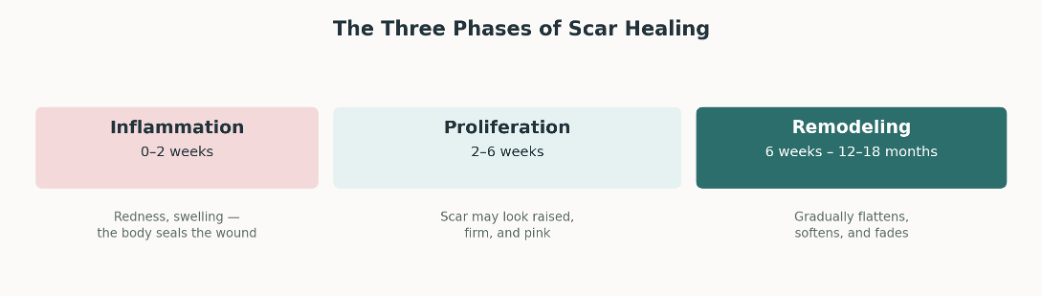
The healing timeline. Individual timing varies by person, wound, and location.
Everyday Scar Care
Most of what makes a real difference to how a scar matures happens at home, in small daily habits. These are the same first-line measures recommended in clinical guidelines worldwide.
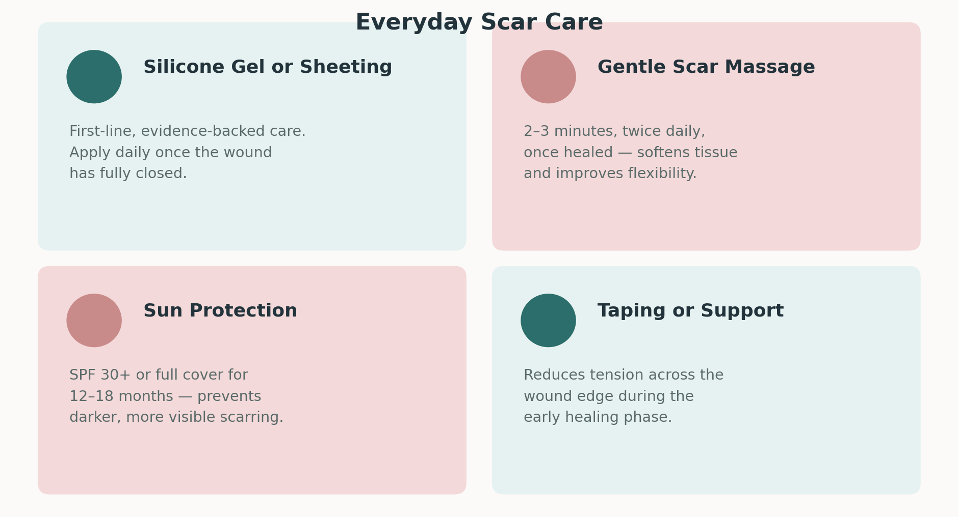
Four simple habits that support healthy scar healing.
• Start silicone gel or sheeting once the wound has fully closed, generally around two weeks
• Massage the healed scar gently for two to three minutes, twice a day, to soften tissue and improve flexibility.
• Protect the scar from direct sun for 12–18 months; new scars darken easily, making them more visible long-term.
• Use supportive taping if your surgeon recommends it, especially over areas of tension or movement.
Understanding Different Types of Scars
Not every scar heals the same way, and a raised or red scar in the early months is common and usually not a cause for worry. Here's how to tell the difference.
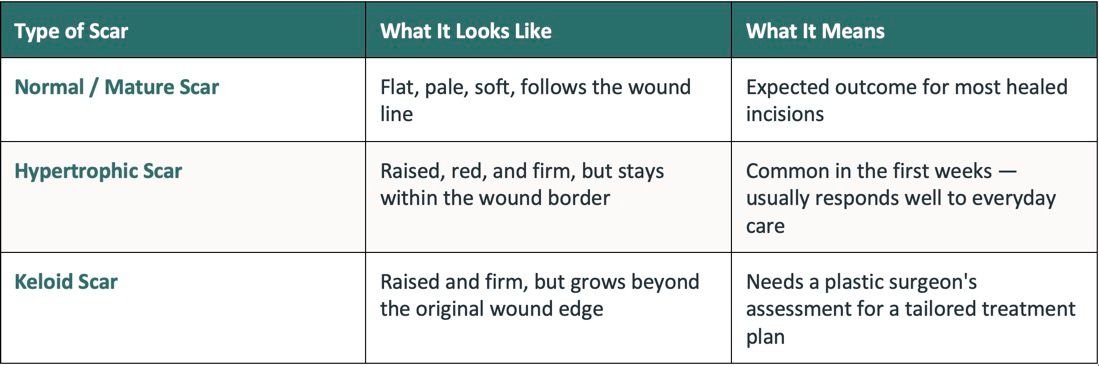
When a Scar Needs More Help
If a scar remains thick, itchy, painful, or restricts movement beyond the early healing phase, further treatment can make a real difference. These options are safe, well-studied, and often combined for the best outcome.
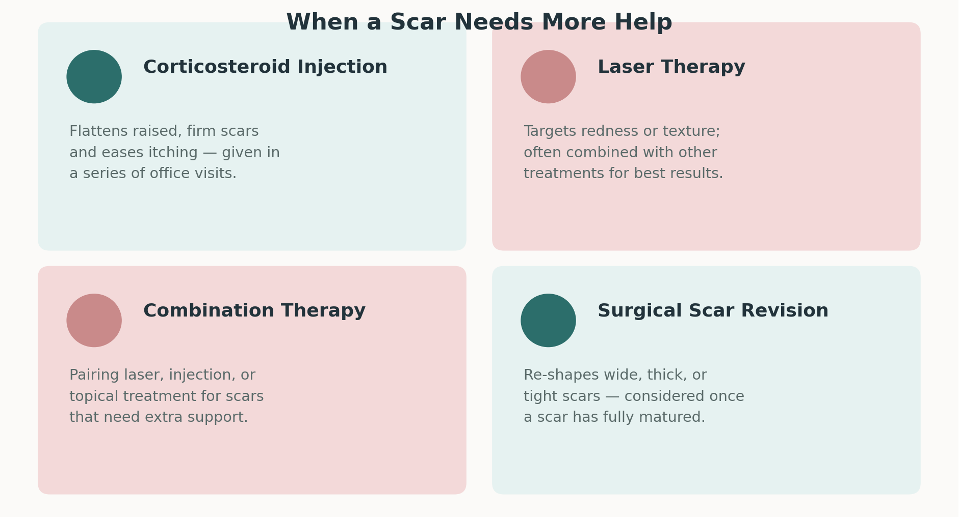
Additional treatments your plastic surgeon may recommend.
Corticosteroid injections
- soften and flatten raised, firm scars and reduce itching, typically given every four to six weeks.
Laser therapy
- can reduce redness or improve texture, and works best as part of a combined treatment plan rather than alone.
Combination therapy
- pairing injections, laser, and topical care — offers the most reliable results for scars that need extra support.
Surgical scar revision
- reshapes a wide, thick, or tethered scar once it has fully matured, usually after 12 months or more.
When to See Your Plastic Surgeon
Most scars heal well with everyday care alone. It's worth booking a review if your scar:
• Keeps growing beyond the edges of the original wound
• Is increasingly painful, itchy, or tender months after surgery
• Restricts movement of a joint or pulls on surrounding skin
• Opens up, discharges fluid, or shows signs of infection
• Is causing ongoing distress about its appearance
What to Expect
Scars continue to change for up to 12 to 18 months after surgery — early redness and firmness are a normal part of healing, not a sign that something has gone wrong. With consistent care, most scars fade substantially well before that window closes, and any remaining concerns can usually be improved further with in-office treatment.
Common Questions
Will my scar ever fully disappear?
No scar disappears completely, but with good care the vast majority become flat, pale, and far less noticeable than in the early months.
When should I start treating my scar?
As soon as the wound has fully closed with no scabbing or open areas — typically around two weeks after surgery. Your surgeon will confirm when it's safe to begin.
Are natural remedies like vitamin E or cocoa butter proven to help?
Evidence for these is limited. Silicone gel or sheeting remains the treatment with the strongest clinical evidence behind it.
Is it too late to improve an old scar?
No. Even long-standing scars can often be improved with the right combination of treatments — it's never too late to ask.
You don't have to guess your way through scar care. Speak with a board-certified plastic surgeon to build a scar management plan suited to your skin, your surgery, and your healing.